
Entry posted by DLJBSP in Animal Wonders
264 views
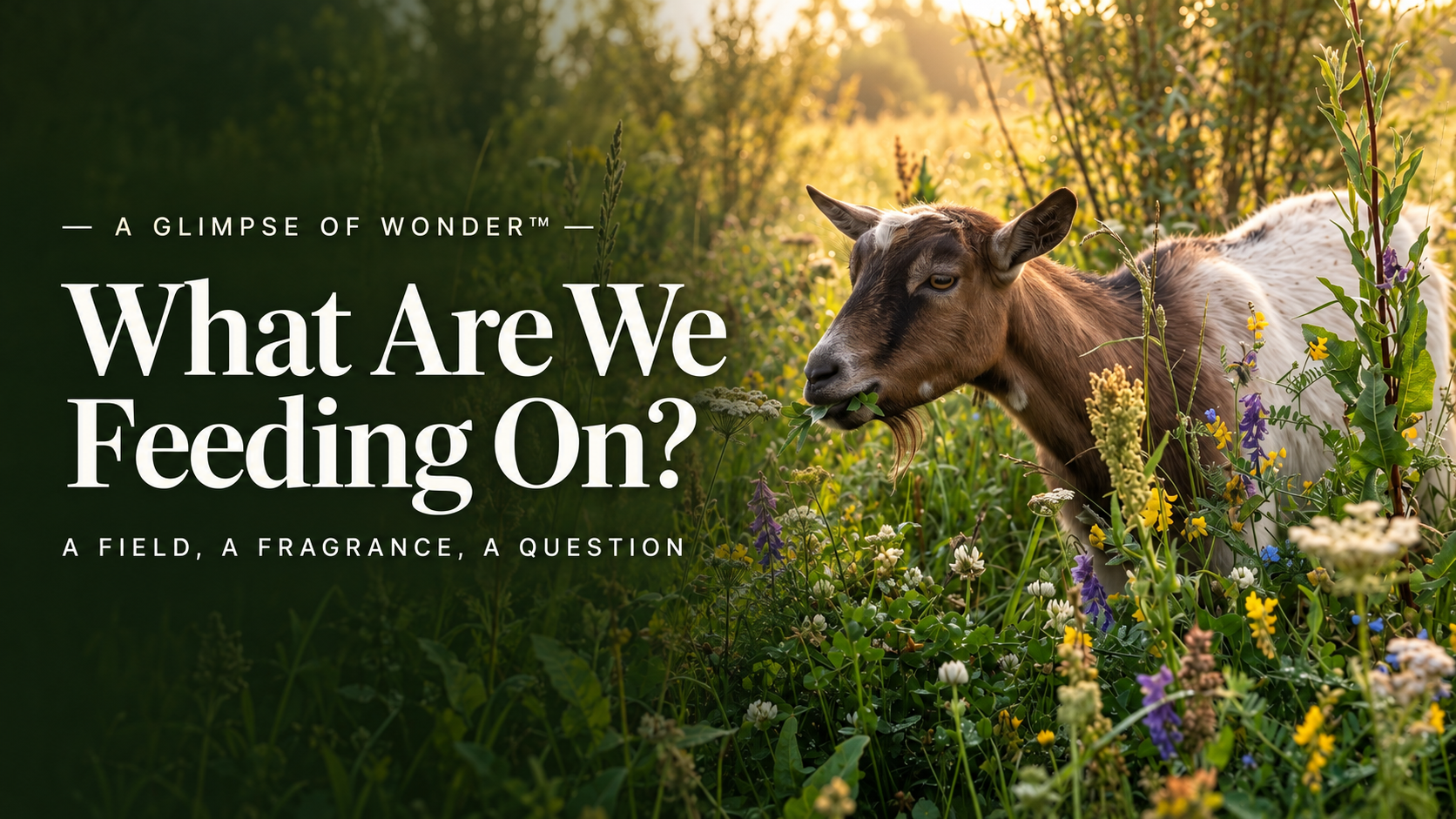
Grass. Leaves. Herbs. Flowers.
Nothing about that seems remarkable.
But later, some of what it ate can be detected in its milk.
Let me explain.
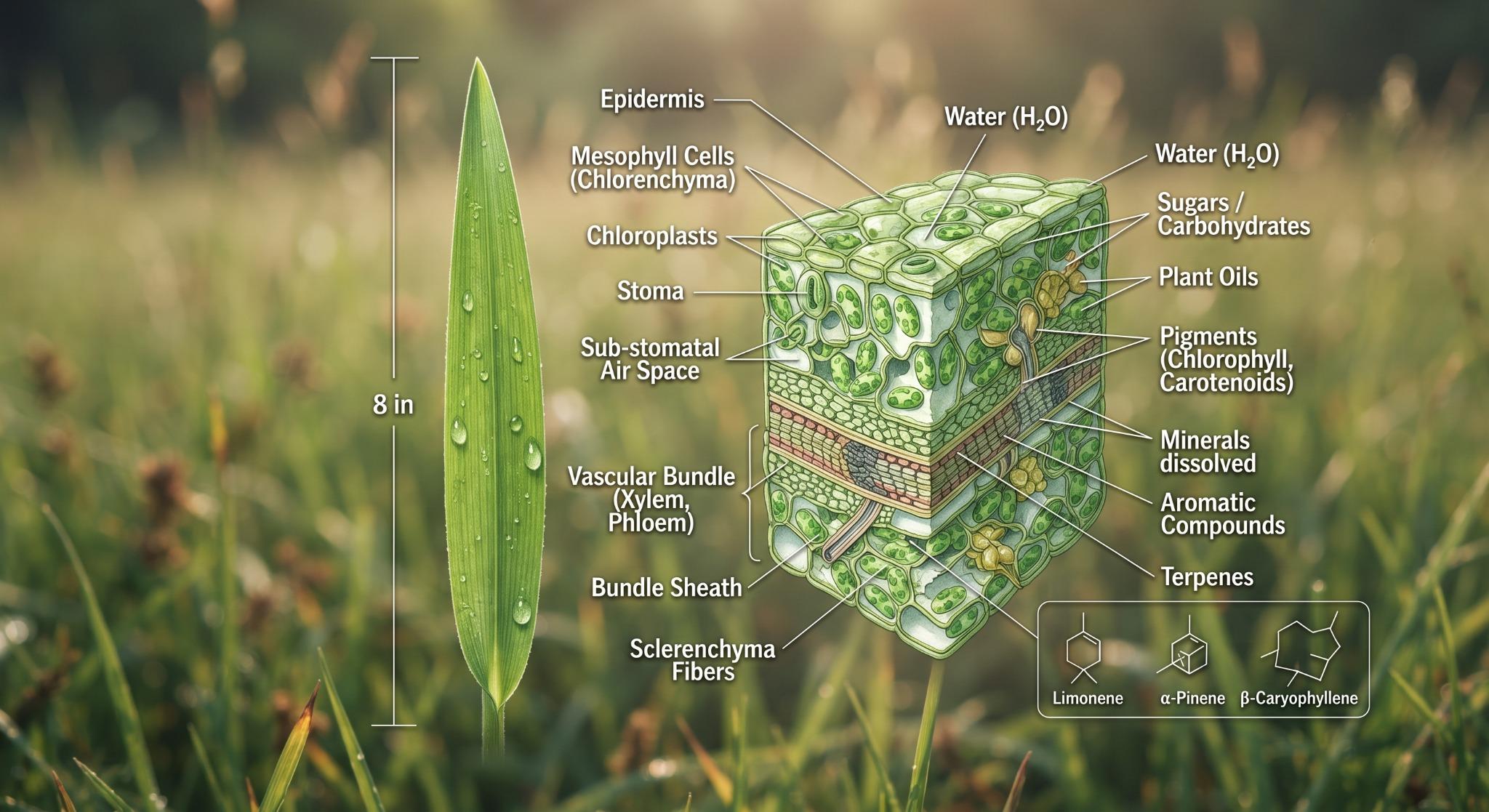
Many plants contain aromatic compounds called terpenes. These are part of what gives herbs, flowers, leaves, and other vegetation their distinctive scents. Limonene contributes a citrus-like aroma. Alpha-pinene is associated with the familiar scent of pine. Beta-caryophyllene occurs in many herbs and spices and carries its own characteristic aroma.
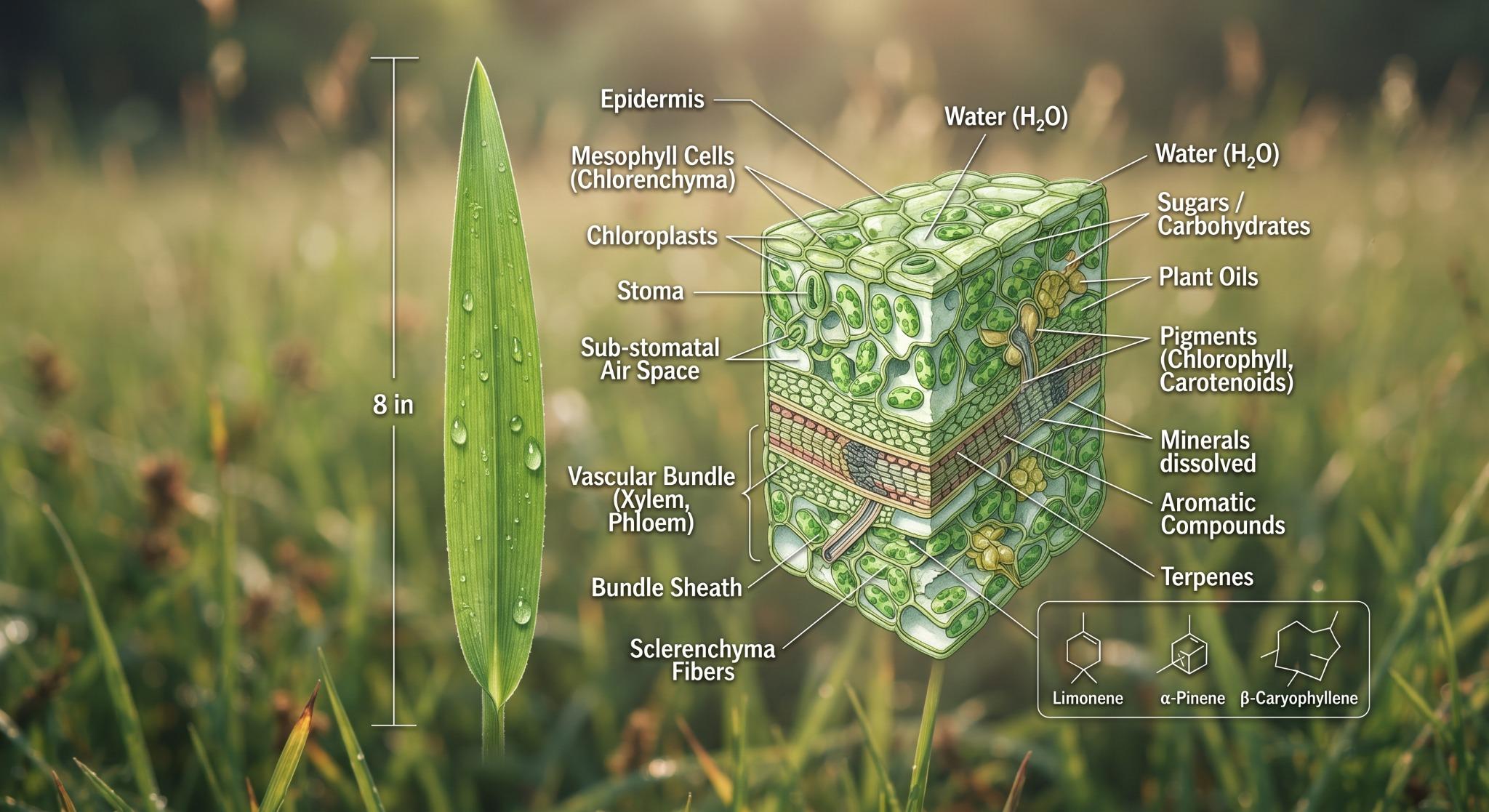
So when an animal grazes, it is not simply taking in “grass.” It is taking in an enormous mixture of natural compounds, including some of the very molecules responsible for the fragrance of the plants around it.
Sheep and goats are ruminants. Their food first enters the rumen, where an enormous community of microorganisms begins breaking it down. Some plant compounds are changed. Some fats are transformed. Some substances are absorbed into the bloodstream and carried throughout the animal’s body.
And some of those terpenes can travel farther than we might expect.
Researchers gave dairy goats a controlled mixture of three terpenes—alpha-pinene, limonene, and beta-caryophyllene—for 18 days. They then looked for those compounds in the animals’ blood, milk, and the cheese made from that milk.
After about three days, limonene and alpha-pinene were found in every blood and milk sample taken from the goats receiving them. Beta-caryophyllene transferred less consistently, but it too was detected in some milk samples. The same terpenes were not found in the control goats that had not received them.
Think about that pathway.
A compound responsible for the fragrance of a plant enters the animal through what it eats.
It passes through an extraordinarily complicated digestive system.
It enters the bloodstream.
It travels through the body.
It reaches the mammary gland.
And there it appears again in the milk.
In a very real chemical sense, part of the pasture has made the journey:
plant → rumen → bloodstream → mammary gland → milk.
And the journey can continue.
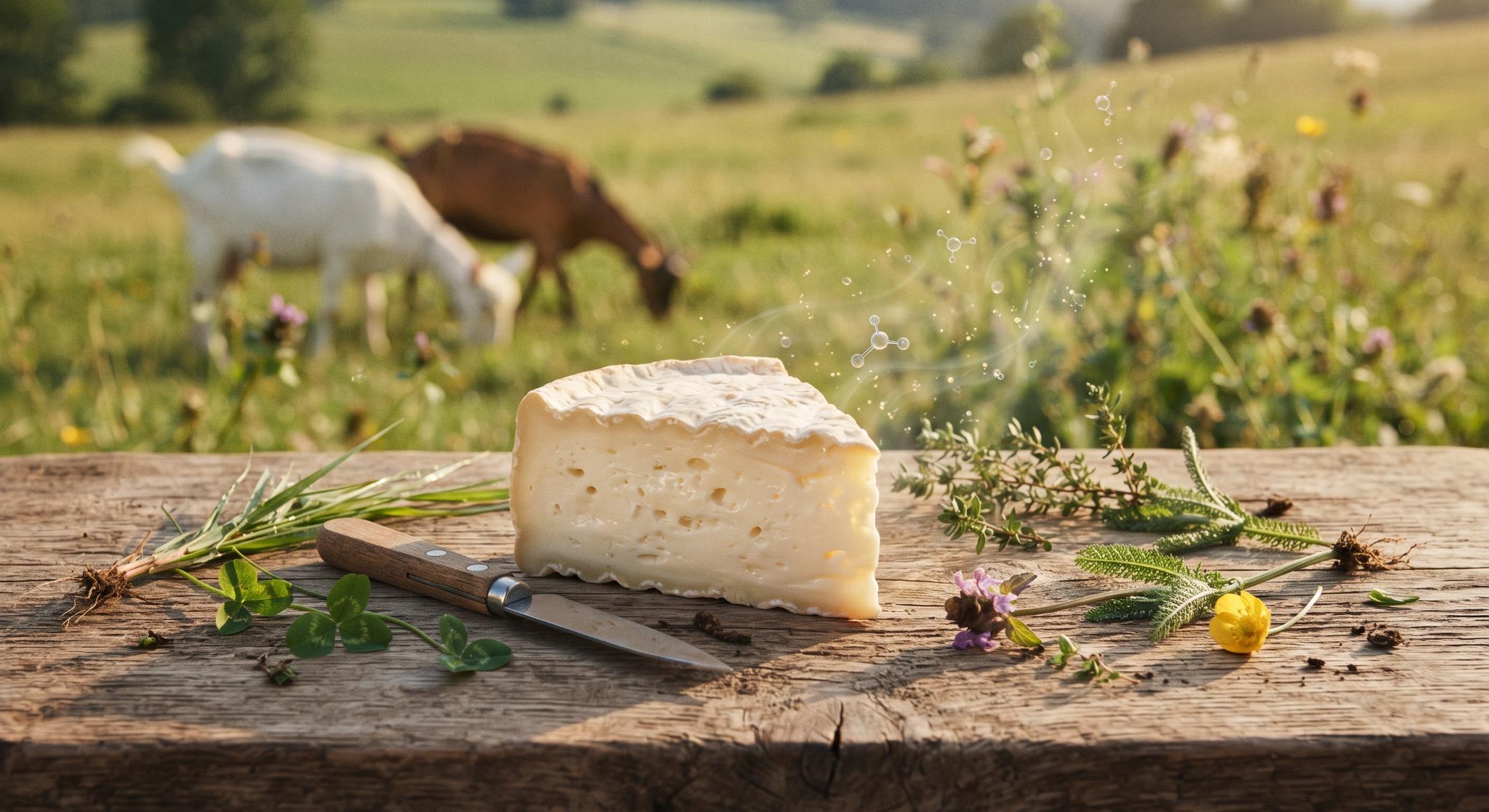
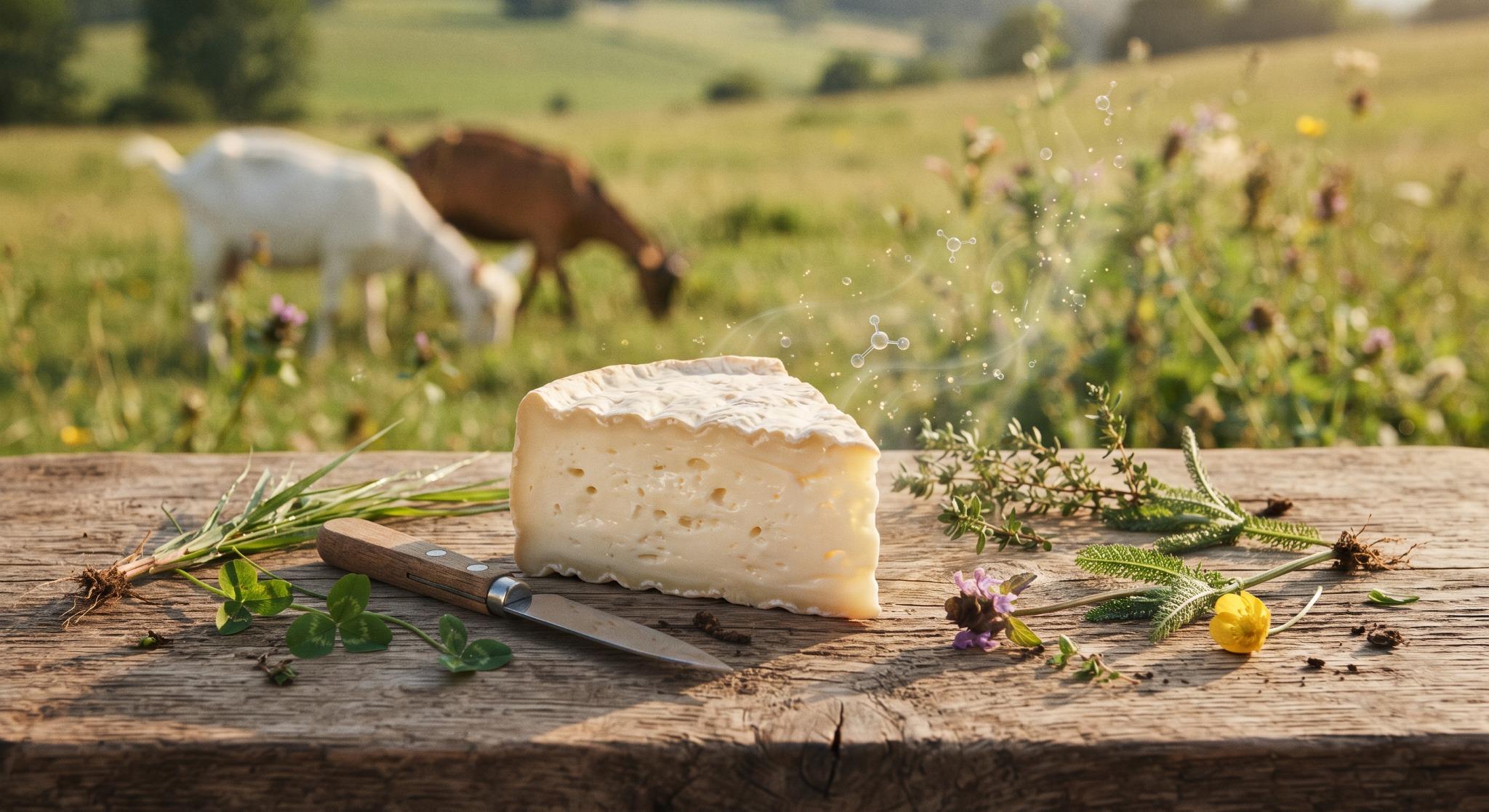
Those researchers also made cheese from the goats’ milk and detected terpenes there as well. Other research with grazing sheep and goats has found alpha-pinene, limonene, beta-pinene, and beta-caryophyllene naturally occurring in their milk, with the terpene profile reflecting something about what the animals had been eating.
But there is more.
The plants do not affect only the aromatic compounds carried into the milk. Diet can also alter the kinds and amounts of fatty acids the animal produces. Those fats influence flavor too. So what the animal eats can affect the milk in more than one way—some compounds travel through, while others change what the animal’s own body produces.
The animal eats something.
Its body breaks some of it down.
Some of it is changed.
Some of it passes through remarkably intact.
Some of it alters what the animal itself begins to produce.
Eventually, what the animal has been feeding on can leave a chemical fingerprint in the milk—and then in the cheese made from that milk.
But there is another side to this that I find just as interesting.
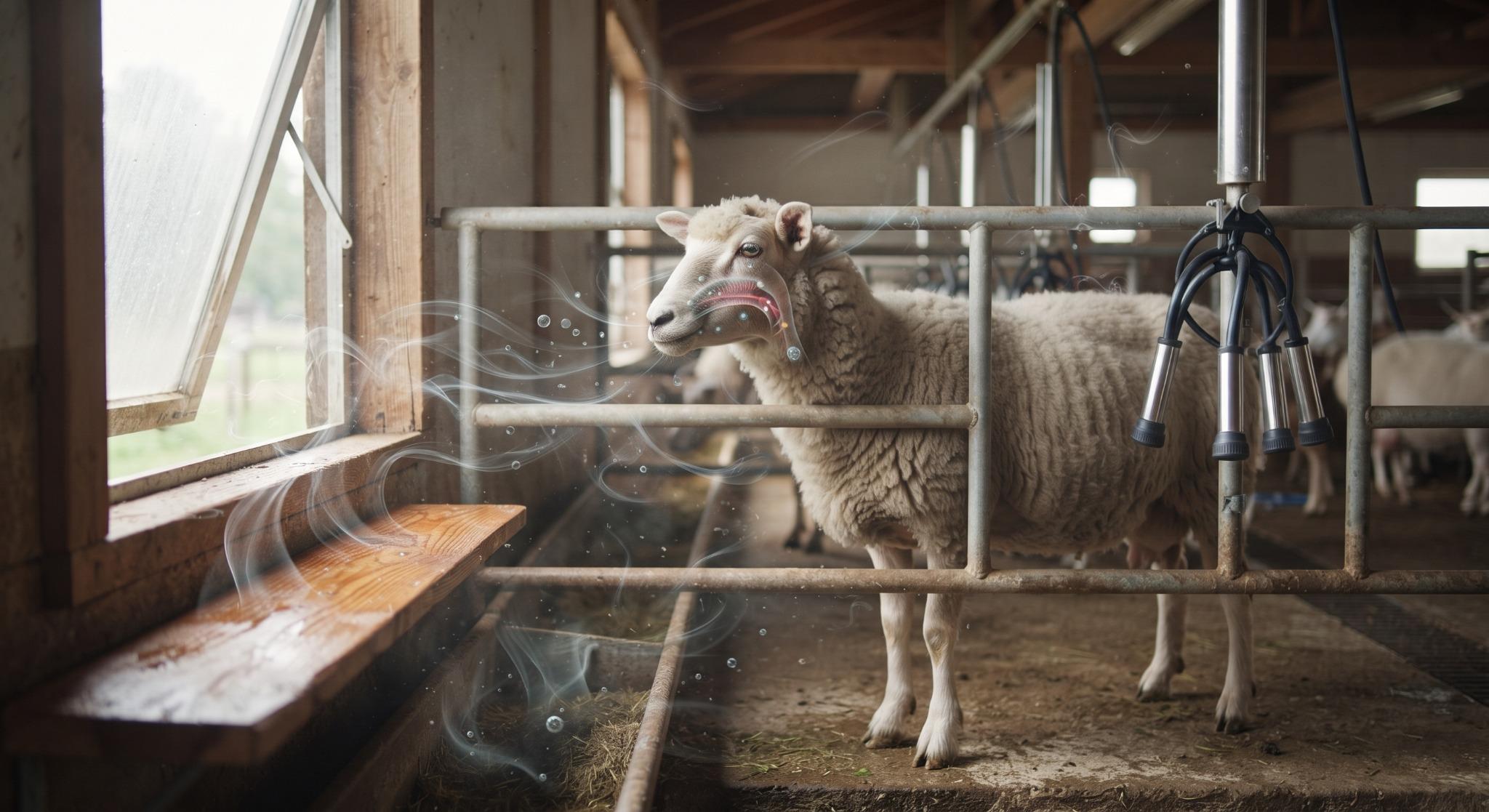
Not everything has to be eaten.
Researchers have even shown that an aromatic compound breathed in by sheep can reach their milk. In one study using limonene, inhalation actually transferred it to the milk more efficiently than eating it did.
So the milk can be influenced not only by what the animal deliberately takes in, but also by what surrounds it.
That made me wonder about us.
We are constantly taking things in too.
Entertainment. Conversations. Music. Humor. News. Social media. The attitudes of people we spend time with.
Much of that is by choice.
But not all of it is.
We may work around people who use foul language constantly. We may hear crude jokes, angry talk, cynical comments, or attitudes we would never deliberately choose for ourselves.
Yet repeated exposure can still have an effect.
At first, something may bother us.
Later, perhaps it bothers us less.
Then maybe one day we catch ourselves repeating an expression we once disliked, laughing at something we once would have rejected, or thinking in a way that did not begin with us at all.
Some things simply pass by.
Others seep in.
Some ideas are changed as we think about them. Some become part of the way we react. Some begin influencing what makes us laugh, what bothers us, what we admire, what we excuse, and what starts to feel normal.
Eventually, we may begin producing thoughts from ingredients we once merely consumed—or were simply exposed to.
That expression, “the sources of life,” becomes especially meaningful.
What enters the heart does not necessarily stay hidden there.
It can eventually become part of what comes out.
Our speech.
Our reactions.
Our desires.
Our decisions.
The spiritual person we are becoming.
Perhaps that gives us a better question than simply asking, “Is there anything wrong with this?”
Maybe we should sometimes ask:
And perhaps another question too:
A goat may browse among herbs and leaves, surrounded by fragrances carried on the air, with no awareness that some of those same aromatic molecules may eventually travel through its blood and appear in its milk.
And later, someone may detect the influence of that pasture in a slice of cheese.
What are we feeding on?
What are we breathing in?
And what is it gradually producing in us?
A Glimpse of Wonder
Edited by DLJBSP
extra
-
 2
2
-
 1
1
-
 1
1
1 Comment
Recommended Comments
Join the conversation with your brothers and sisters!
You are posting as a guest. If you are already a member, sign in now to post with your existing account.
Note: Your post will require moderator approval before it will be visible.