The Tortoise That Forgot to Grow Old
Entry posted by DLJBSP in Systems of Wonder
31 views
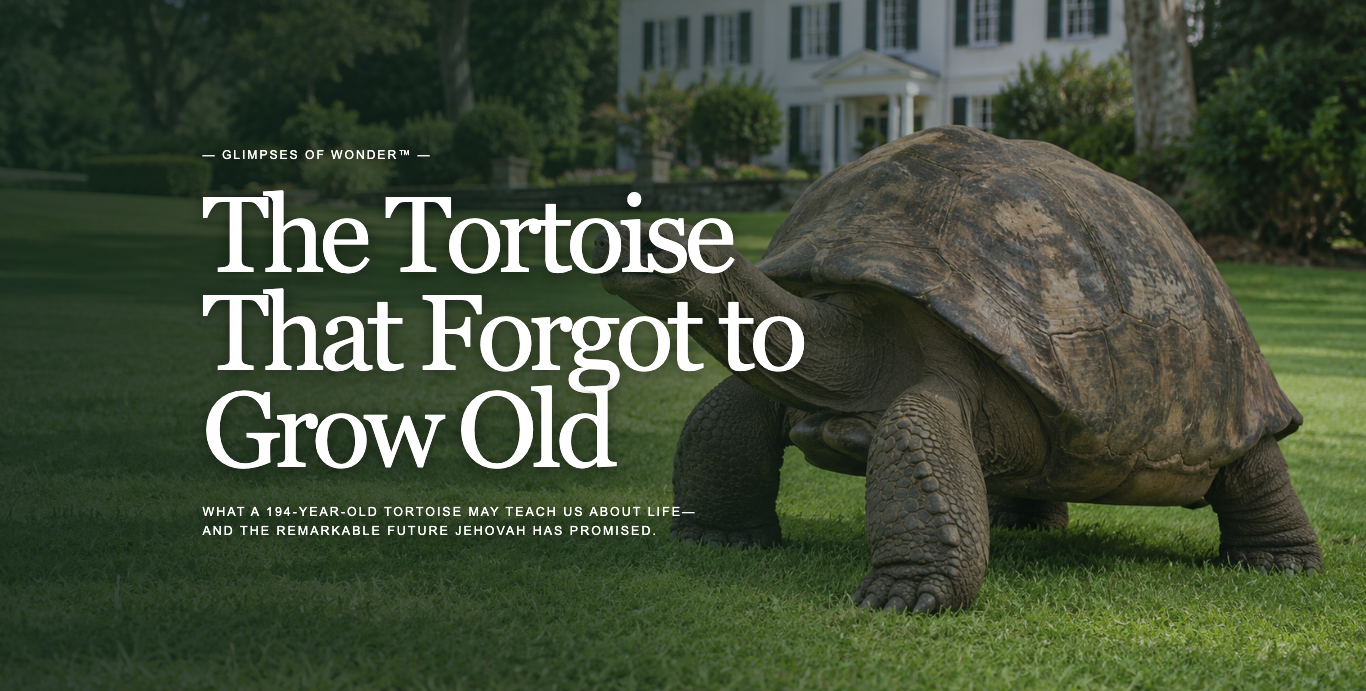
Imagine being born in 1832.
You would have lived through the invention of the telephone, the automobile, the airplane, and the computer. You would have witnessed generations come and go, watched the world change beyond recognition, and perhaps wondered what the next century might bring.
Now imagine that, after all those years, you were still alive.
Let me introduce you to Jonathan.
Jonathan is a giant tortoise living on the remote Atlantic island of St. Helena. At an estimated 194 years of age, he holds the distinction of being the oldest known living land animal. He was already about 50 years old when he arrived on the island in 1882.
And apparently, he hasn't been in much of a hurry since.
But Jonathan has recently given scientists something far more interesting to contemplate than his remarkable age.
The extraordinary way his body has managed to keep itself alive.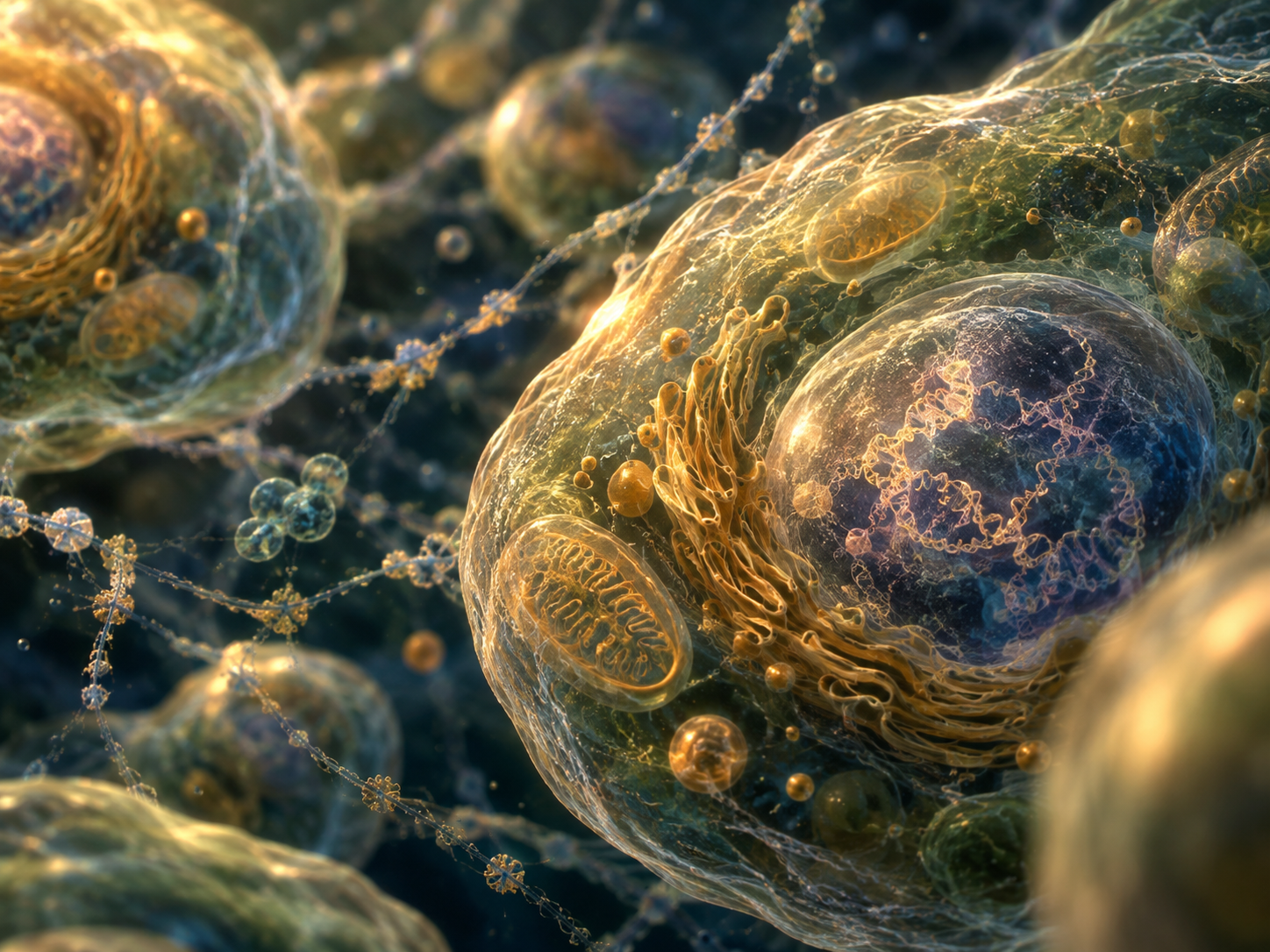
In October 2026, researchers published a study in Science Advances examining Jonathan's genome and the chemical markers that help regulate how his genes function.
What they discovered was fascinating.
Although Jonathan's DNA shows many expected signs of aging, certain regions involved in essential cellular processes remain surprisingly well organized.
These regions are associated with energy production, RNA processing, and DNA repair.
Think about that for a moment.
Every living cell must continually carry out extraordinarily complicated work just to stay alive. DNA must be maintained and repaired.
Energy must be produced. Instructions must be accurately processed.
And all of this takes place without our conscious involvement.
The researchers found evidence suggesting that Jonathan's cells have preserved some of the molecular organization necessary to perform these tasks efficiently, even after nearly two centuries.
They haven't discovered a cure for aging. Nor have they established precisely why Jonathan has lived so long.
But they have uncovered another small piece of a much larger mystery.
Why do some living creatures possess such remarkable abilities to resist the effects of time?
And that leads me to something even more wonderful.
We often think of aging as an unavoidable part of life. We expect our bodies to weaken, our abilities to diminish, and eventually, our lives to end.
We have never experienced anything different.
Yet, when we consider the extraordinary mechanisms already present in living things, it becomes easier to appreciate just how marvelously Jehovah has designed life.
Even now, within imperfect human bodies, trillions of cells work continually to maintain our existence. Our bodies repair injuries, replace damaged cells, and perform countless processes that we scarcely understand.
And yet, despite all these remarkable abilities, we grow old.
Why?
The Bible offers an explanation. At Romans 5:12, we read:
“That is why, just as through one man sin entered into the world and death through sin, and so death spread to all men because they had all sinned—.”
Our present limitations were never Jehovah's original purpose for the human family.
What will life be like when those limitations are finally removed?
Consider the privilege awaiting obedient mankind under God's Kingdom.
We look forward to the time when Jehovah, through the ransom sacrifice of Jesus Christ, will bring mankind to perfection.
Imagine what that will mean.
No longer will our bodies be burdened by inherited imperfection. The gradual deterioration that we now associate with growing older will no longer determine how long we live.
We will be able to enjoy life as Jehovah originally intended.
Forever.And there is something especially touching about the way Jehovah describes that future.
At Revelation 21:4, he promises:“And he will wipe out every tear from their eyes, and death will be no more, neither will mourning nor outcry nor pain be anymore. The former things have passed away.”
Notice that Jehovah does not merely promise us a longer life.
He promises a life in which death itself will be removed.
What a difference!
Scientists are understandably fascinated by Jonathan's ability to remain alive for nearly two centuries. Perhaps their research will eventually help people enjoy additional years of better health.
And that would certainly be a welcome accomplishment.
But Jehovah's promise reaches far beyond anything medical science could achieve.
He is not simply offering mankind a few additional decades—or even centuries.
He is offering everlasting life.In fact, consider the beautiful simplicity of the promise found at Psalm 37:29:
“The righteous will possess the earth, And they will live forever on it.”
Forever.
Can we even begin to comprehend what that means?
Imagine what we will be able to learn when time is no longer our enemy.
Today, we might spend a lifetime developing an appreciation for astronomy, music, mathematics, or the natural world. Yet there will always be more to discover than we have time to explore.
What about when there is no such limit?
Perhaps we will spend centuries studying Jehovah's creation and still feel that we have barely begun.
Every discovery revealing something new about the wisdom of our Creator.
Every passing year adding to our appreciation rather than bringing us closer to death.
And every morning awakening with the wonderful knowledge that the future still stretches before us.
Jonathan's remarkable longevity reminds us that the living world contains abilities we are only beginning to understand.
But perhaps the greatest wonder is not that a tortoise has managed to live for 194 years.
It is that Jehovah created humans with the prospect of enjoying something infinitely more precious.
Not merely a long life.
A life without an ending.
And when that promised future becomes our reality, perhaps we will look back on the longest-lived creatures of our present world with a smile.
After all, 194 years is remarkable today.
But in eternity?We're only getting started.
Scientific reference: Vaisvil et al. (2026). Epigenetic insights into extreme longevity in the world's oldest terrestrial animal, Jonathan. Science Advances.
Scriptural quotations: New World Translation of the Holy Scriptures (Study Edition). Romans 5:12; Revelation 21:4; Psalm 37:29.
Glimpses of Wonder™ and Glimpses of Wonder™ are trademarks.
© 2020–2026 David Stephen Paull. All rights reserved.
2 Comments
Recommended Comments
Join the conversation with your brothers and sisters!
You are posting as a guest. If you are already a member, sign in now to post with your existing account.
Note: Your post will require moderator approval before it will be visible.