

Lewis
-
Posts
1,361 -
Joined
-
Last visited
-
Days Won
1
Content Type
Profiles
Forums
Downloads
Events
Gallery
JWTalk Insider
Blogs
Everything posted by Lewis
-
September 2026 Global Temperature Update, Second Warmest September on Record +1.63°C Temperature Mean September (1880-1920)NASA Current Record (2023) (+1.73C) +1.51°C➖ For the Year Hottest year (2024) 1.56c Second hottest year (2025) 1.46c Third hottest year (2023) 1.45c +1.48°C👇 Last 12 Months
-
El Niño 3.4 now at +3.4C above average. EL NIÑO/SOUTHERN OSCILLATION (ENSO) DIAGNOSTIC DISCUSSION issued by CLIMATE PREDICTION CENTER/NCEP/NWS 8 October 2026 ENSO Alert System Status: El Niño Advisory Synopsis: El Niño continues to strengthen, with a strong-to-very strong El Niño likely through January-March 2027 (remaining greater than an 83% chance). El Niño strengthened further last month, with sea surface temperature anomalies exceeding +4.0°C in portions of the eastern equatorial Pacific [Fig. 1]. Most Niño indices increased in the past month, reaching +2.1°C in Niño-3.4, +3.0°C in Niño-3, and +3.9°C in Niño-1+2 [Fig. 2]. The equatorial subsurface temperature index (average from 180°-100°W) was well above average [Fig. 3], reflecting a deeper-than-average thermocline. Subsurface temperatures remained in excess of +10.0°C at depth in the eastern Pacific Ocean [Fig. 4]. Low-level westerly wind anomalies and upper-level easterly wind anomalies stretched from the western to the east-central equatorial Pacific. Enhanced convection and rainfall persisted from the central to the eastern Pacific, while anomalies remained suppressed over Indonesia [Fig. 5]. The traditional and equatorial Southern Oscillation indices were significantly negative. Collectively, the coupled ocean-atmosphere system reflected a strengthening El Niño. The CPC Official ENSO outlook, which synthesizes multiple models from North America and abroad, indicates El Niño will continue to strengthen through the end of the year [Figs. 6-7-8]. Chances remain high for a historic event that would exceed the strength of previous El Niño events dating back to 1950 (+2.5°C or more for a 3-month RONI value😞 the chance is 54% for September-November, 83% for October-December, and 70% for November-January. With an event of this magnitude, the chances of experiencing impacts consistent with El Niño are larger, though not guaranteed (see CPC outlooks for probabilities of seasonal anomalies). In summary, El Niño continues to strengthen, with a strong-to-very strong El Niño likely through January-March 2027 (remaining greater than an 83% chance). This discussion is a consolidated effort of the National Oceanic and Atmospheric Administration (NOAA), NOAA's National Weather Service, and their funded institutions. Oceanic and atmospheric conditions are updated weekly on the Climate Prediction Center web site (El Niño/La Niña Current Conditions and Expert Discussions). A probabilistic strength forecast is available here. The next ENSO Diagnostics Discussion is scheduled for 12 November 2026.
-
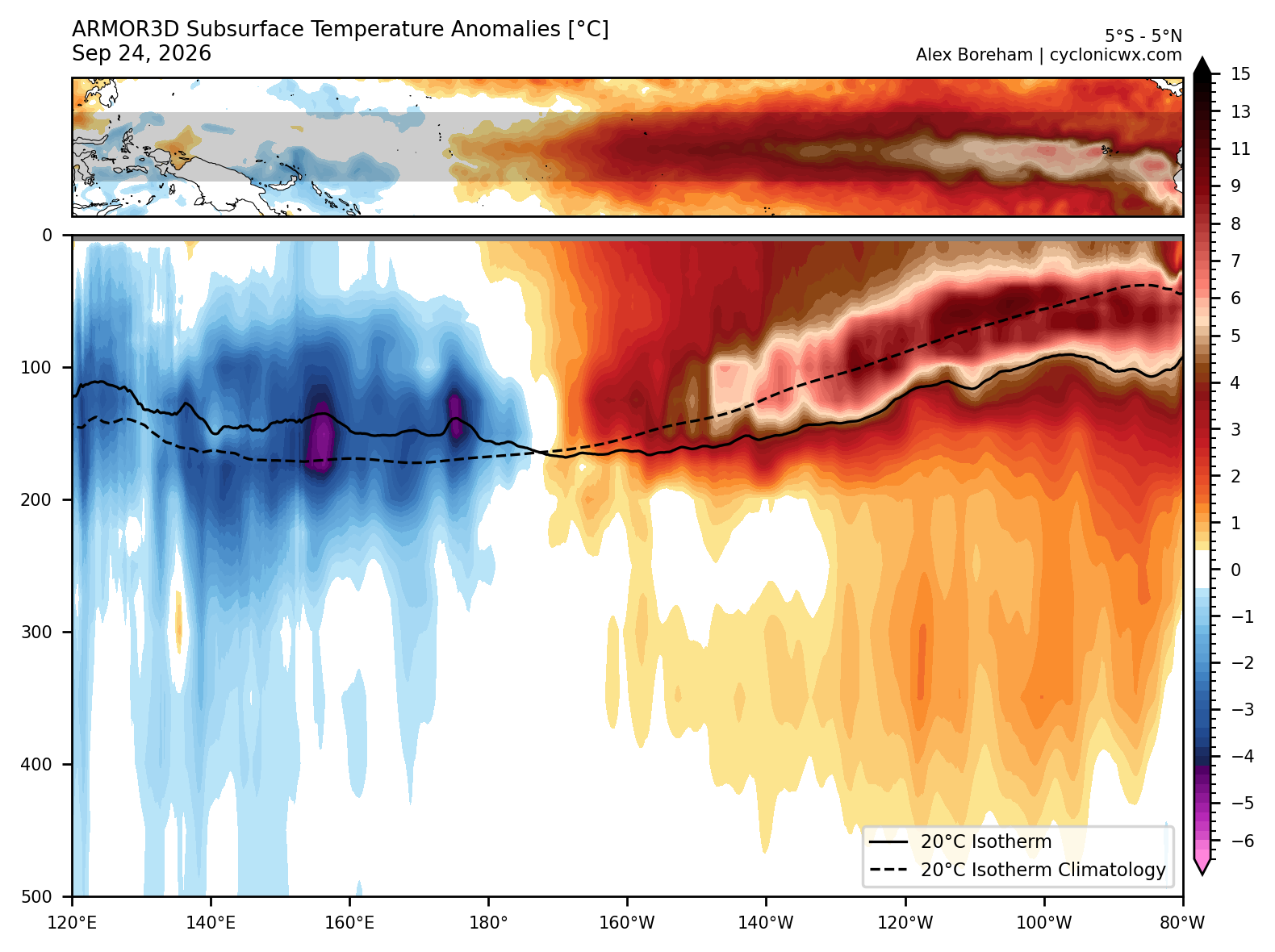
Nino 3.4 now at +3.2C above average and still tons of heat to come up still (see graph). They had to add again to the Y-axis to +15C, due to the ocean getting hotter at levels we’ve never seen. This heat has to come up to the surface before this is all over. What a rough year its going to be.

-
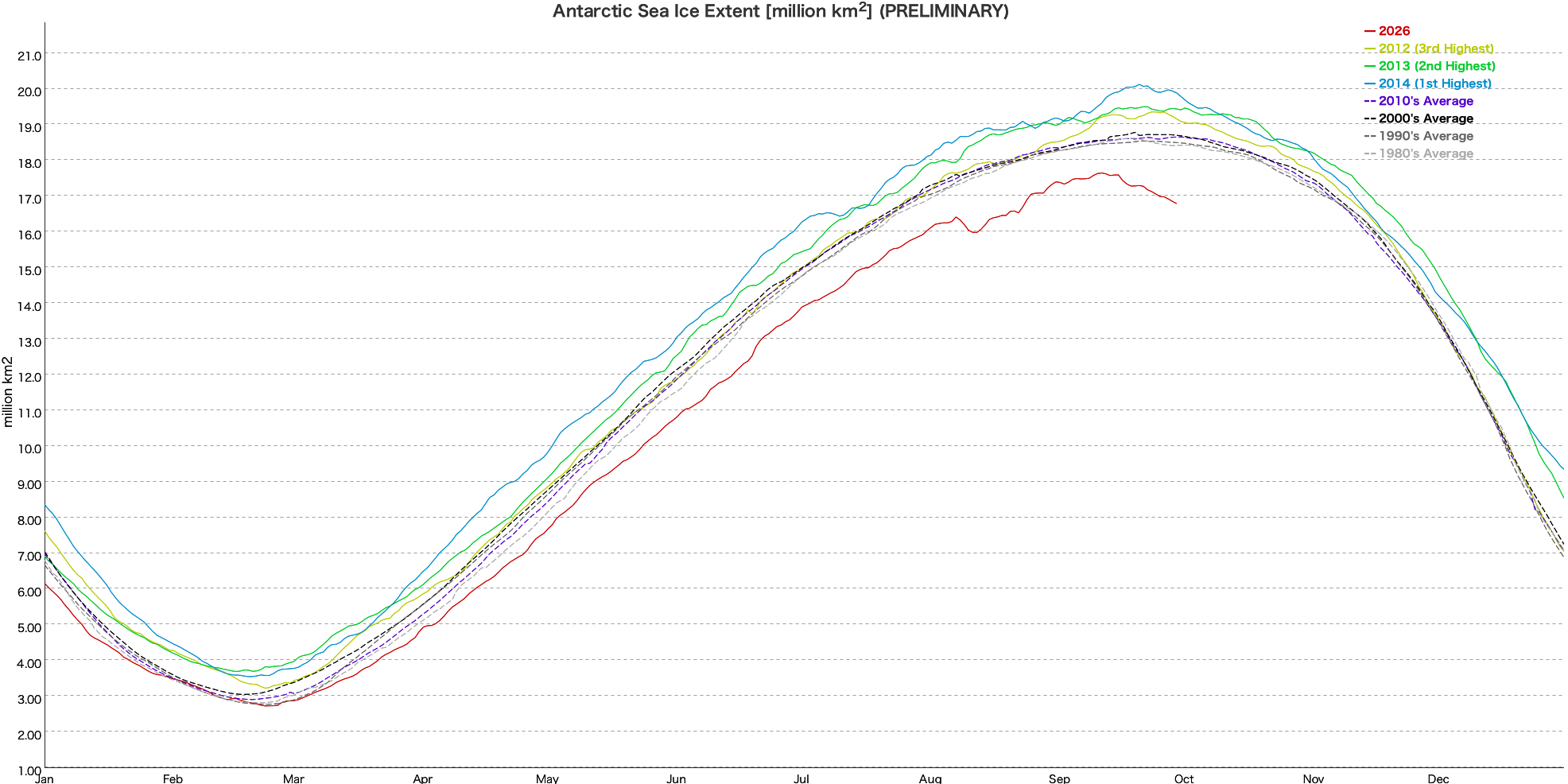
Antarctica now Lowest on record, it’s in full blown melt season about a month+ ahead of schedule.
-
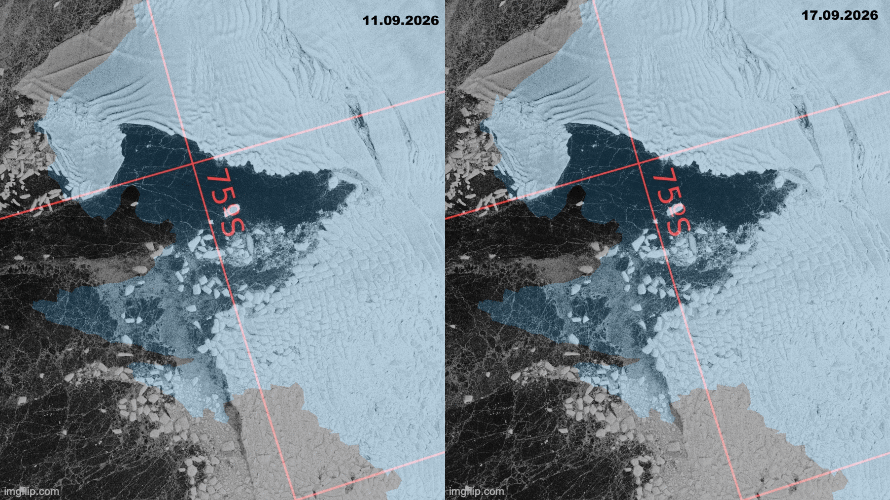
More information about this ice shelf/Glacier, no official statement is out yet though.
-
The eventual consequence is sea level rise worldwide, not from this floating and moving Thwaites Western Ice Tongue in that Gif, but from the highly unstable Thwaites Glacier that is being held back by, along with all of the other Glaciers beside it. Thats why the Thwaites Glacier is also known as the Doomsday Glacier, because there are grave consequence if the Ice Shelf collapses, which we are witnessing right now. No one knows yet what caused the Ice Shelf to shift suddenly, one theory is it could be Thwaites Glacier starting to collapse into the Ocean causing that push. Another theory is there are pinning points in the Ice Shelf and perhaps it unpinned and is freeing the Ice Shelf to move with the help of the winds. Dont know exactly yet.
-
Something big just happened in Thwaites, a large section of the ice shelf is on the move.
-
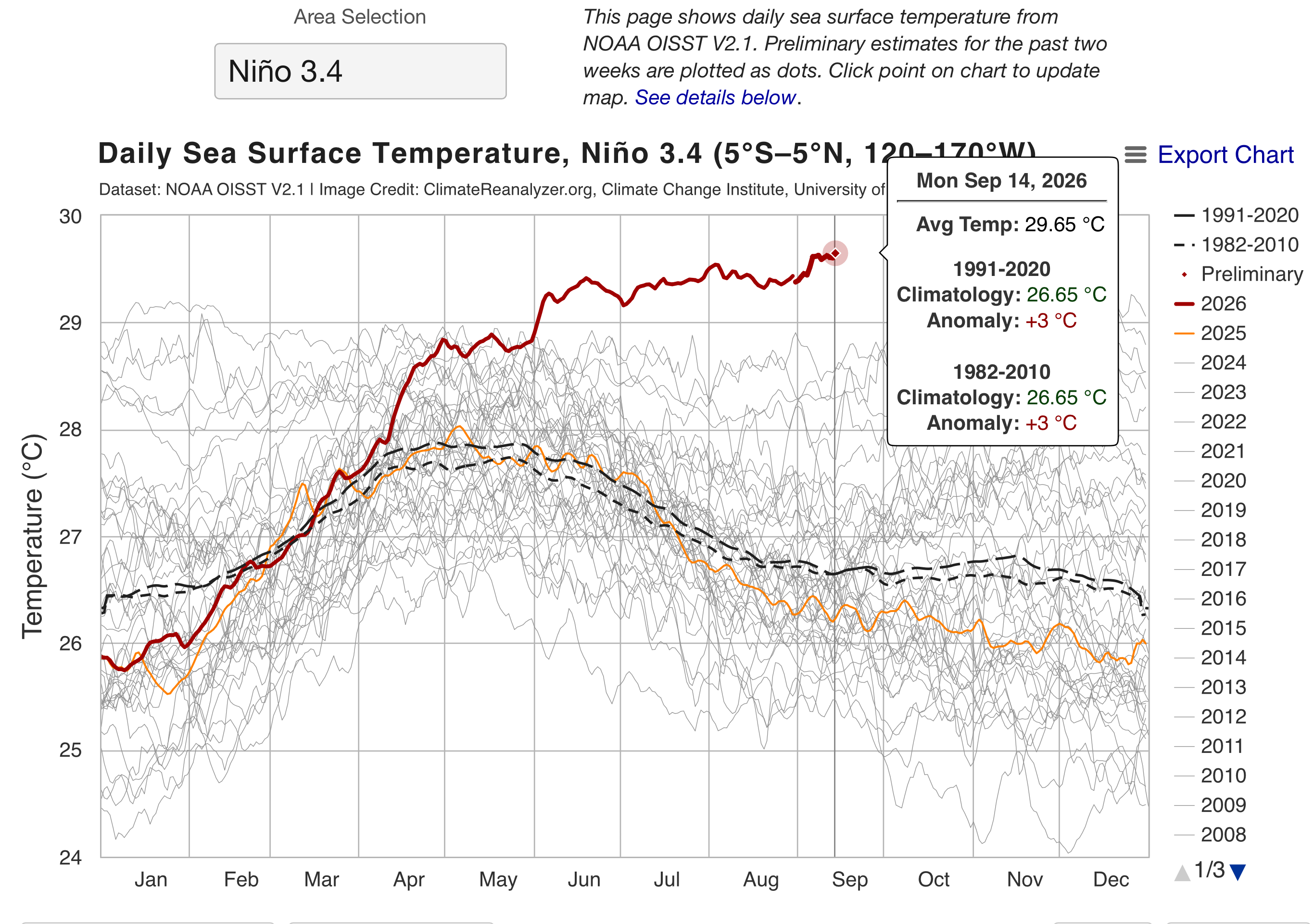
Just hit +3.0C mark, now in historical territory. On trajectory towards +4.0C as forecast models are showing
-
NASA figures are in and it is Warmest month on record for the second consecutive month in a row. Now the race between 2026 vs 2024 for the warmest is on and you can see from the chart below 2026 is picking up speed. August 2026 Global Temperature Update, Warmest August on Record +1.66°C Temperature Mean August (1880-1920)NASA Current Record (2026) (+1.66C) Second (2024) (+1.56C) Third (2023) (+1.45C) +1.51°C👆 For the Year Hottest year (2024) 1.56c Second hottest year (2025) 1.46c Third hottest year (2023) 1.45c +1.49°C👆 Last 12 Months
-
EL NIÑO/SOUTHERN OSCILLATION (ENSO) DIAGNOSTIC DISCUSSION issued by CLIMATE PREDICTION CENTER/NCEP/NWS 10 September 2026 ENSO Alert System Status: El Niño Advisory Synopsis: El Niño is strengthening, with a greater than 90% chance of a very strong event during the Northern Hemisphere fall and winter 2026-27. El Niño strengthened further over the past month, with sea surface temperature anomalies exceeding +3.0°C in the eastern equatorial Pacific [Fig. 1]. Except for the Niño-4 index, which decreased to +0.1°C in August, values in the other Niño indices increased, reaching +1.8°C in Niño-3.4, +2.5°C in Niño-3, and +3.4°C in Niño-1+2 [Fig. 2]. The equatorial subsurface temperature index (average from 180°-100°W) remained steady during August [Fig. 3], reflecting a deeper-than-average thermocline [Fig. 4]. Subsurface temperatures continued to be significantly above average, with widespread anomalies in excess of +10.0°C at depth. Low-level westerly wind anomalies and upper-level easterly wind anomalies extended from the western to the east-central equatorial Pacific. Enhanced convection and rainfall persisted from the central to the eastern Pacific, while anomalies remained suppressed over Indonesia [Fig. 5]. The traditional and equatorial Southern Oscillation indices remained negative. Collectively, the coupled ocean-atmosphere system reflected a strengthening El Niño. The CPC Official ENSO outlook, which synthesizes multiple models from North America and abroad, indicates El Niño will continue to strengthen through the end of the year [Figs. 6-7-8]. During the October-December 2026 season, there is a 75% chance of a historic event that would exceed the strength of previous El Niño events dating back to 1950 (+2.5°C or more for a 3-month RONI value). With an event of this magnitude, the chances of experiencing impacts consistent with El Niño are larger, though not guaranteed (see CPC outlooks for probabilities of seasonal anomalies). In summary, El Niño is strengthening, with a greater than 90% chance of a very strong event during the Northern Hemisphere fall and winter 2026-27. This discussion is a consolidated effort of the National Oceanic and Atmospheric Administration (NOAA), NOAA's National Weather Service, and their funded institutions. Oceanic and atmospheric conditions are updated weekly on the Climate Prediction Center web site (El Niño/La Niña Current Conditions and Expert Discussions). A probabilistic strength forecast is available here. The next ENSO Diagnostics Discussion is scheduled for 8 October 2026.
-
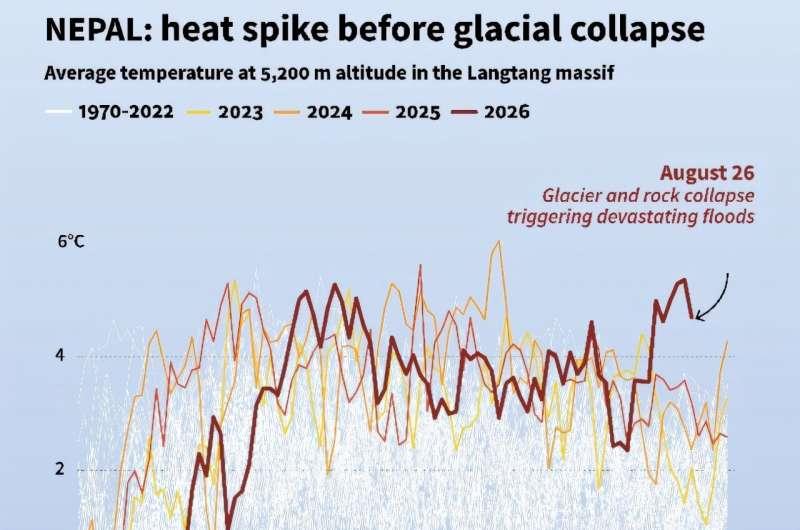
Nepal glacier saw exceptional heat before collapse that caused the flooding. https://phys.org/news/2026-09-nepal-glacier-exceptional-collapse-deadly.html
-
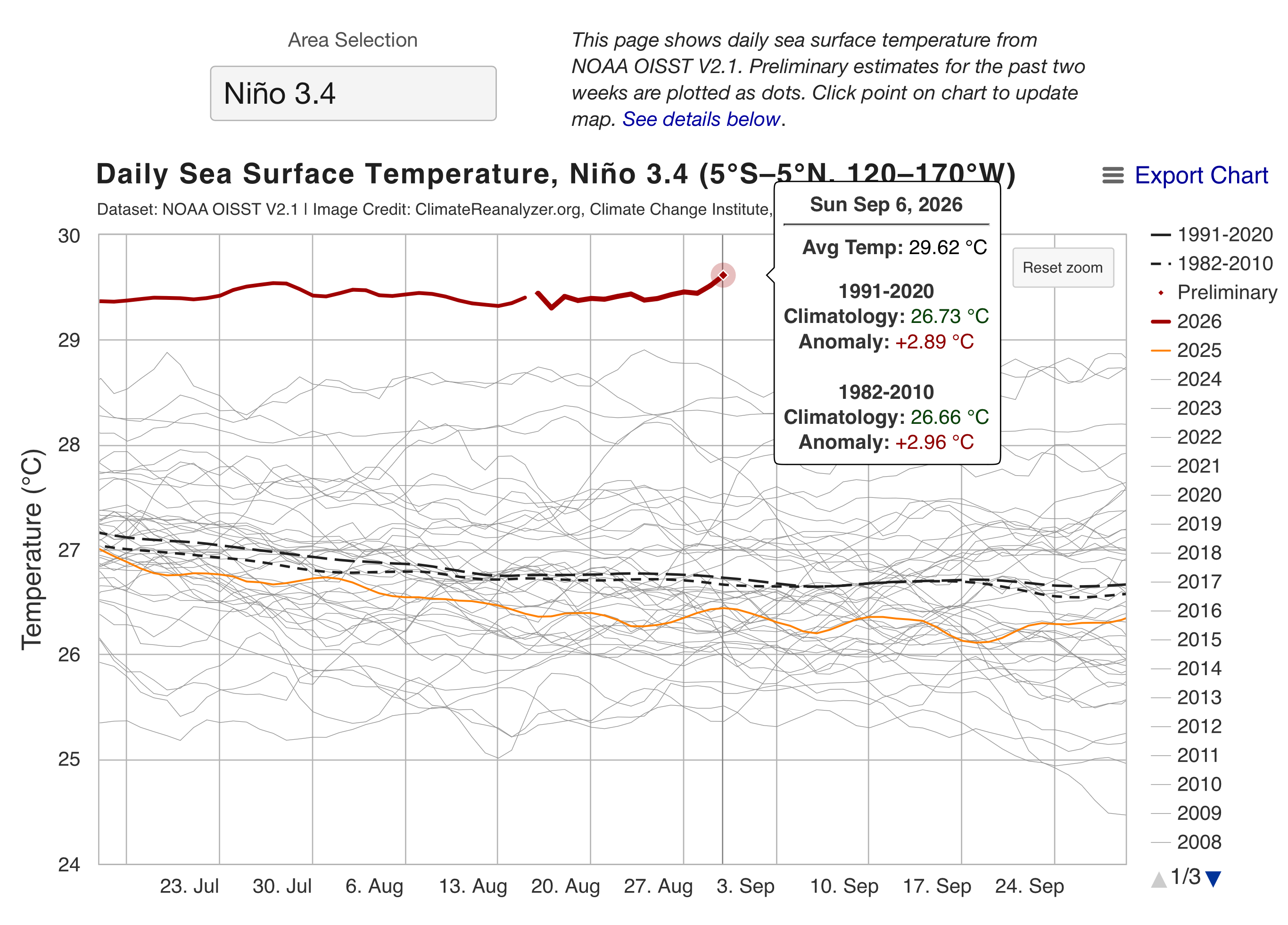
Climbing again, +2.89C now
-
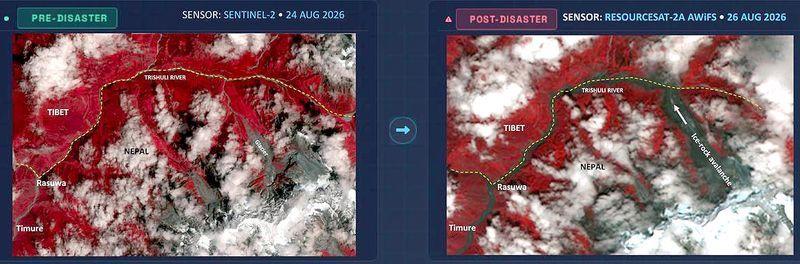
Satellites capture Pre/Post imagery of what caused flooding in Nepal. ISRO & Sentinel 2 imagery show that two thirds of a glacier body collapsed that created an avalanche into the Bhote Koshi & Trishuli River systems causing the downstream flooding.
-
Here is a dashboard of the current El Niño that is coming, you can view its current status. It’s projected for El Niño to reach +3.9C. https://dashboard.theclimatebrink.com/#enso
-
In Vancouver we didn’t get any snow until February and it was minimal and didn’t last long enough to enjoy it. I have a feeling this year will be different.
-
Dont think anything will compare with this El Niño
-
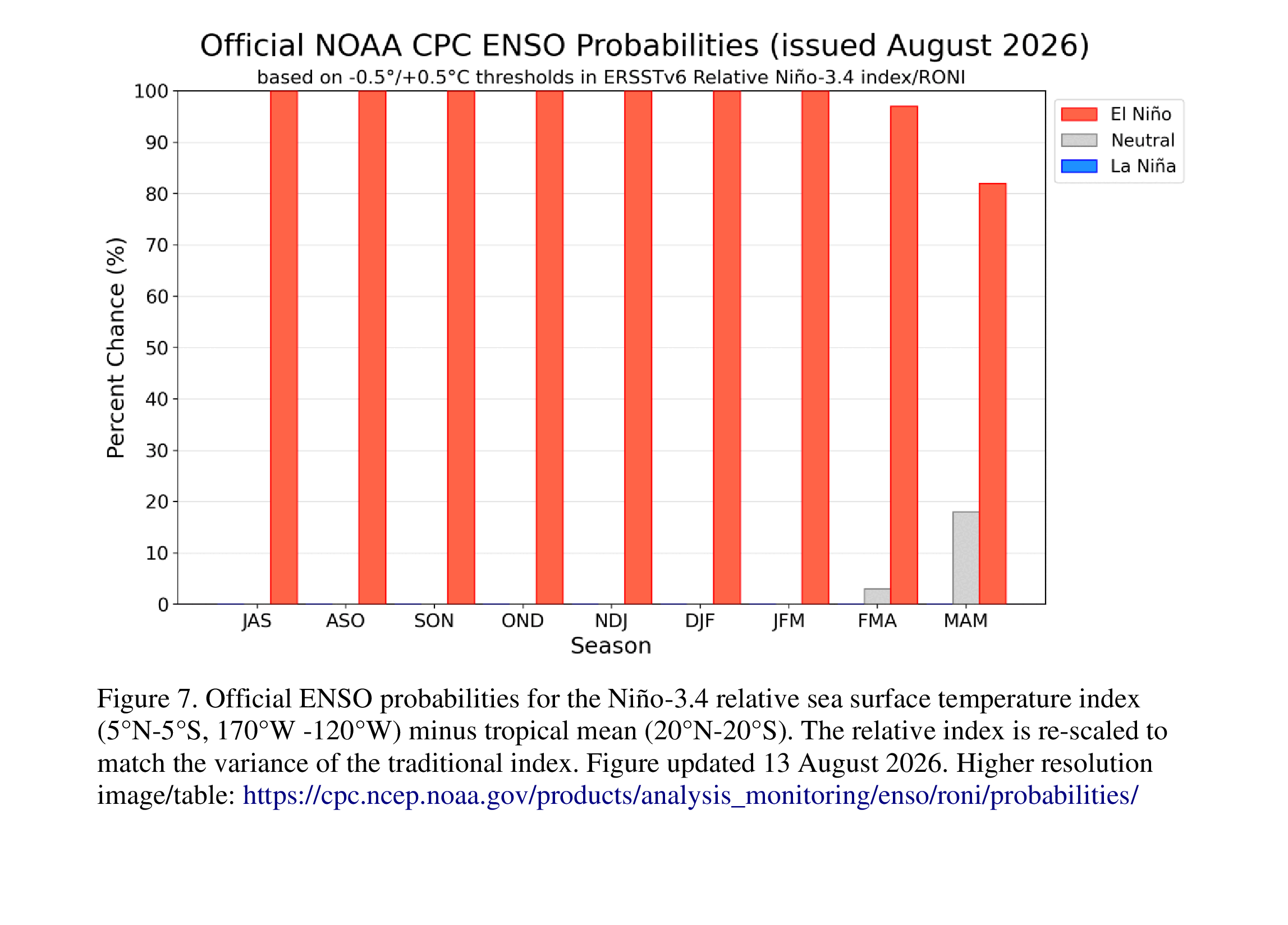
EL NIÑO/SOUTHERN OSCILLATION (ENSO) DIAGNOSTIC DISCUSSION issued by CLIMATE PREDICTION CENTER/NCEP/NWS 13 August 2026 ENSO Alert System Status: El Niño Advisory Synopsis: El Niño is strengthening, with a greater than 90% chance of a very strong event during the Northern Hemisphere fall and winter 2026-27. El Niño strengthened over the past month, with sea surface temperature anomalies exceeding +2.0°C in the eastern equatorial Pacific [Fig. 1]. The July Niño index values were +1.4°C in Niño-3.4, +1.7°C in Niño-3, and +2.9°C in Niño-1+2 [Fig. 2]. The equatorial subsurface temperature index (average from 180°-100°W) increased during July [Fig. 3], reflecting a deeper-than-average thermocline [Fig. 4]. Subsurface temperature anomalies were significant, reaching +10.0°C at depth. Low-level westerly wind anomalies and upper-level easterly wind anomalies extended from the western to east-central equatorial Pacific. Convection and rainfall were enhanced from the central to eastern Pacific and were suppressed over Indonesia [Fig. 5]. The traditional and equatorial Southern Oscillation indices were significantly negative, with values near 2 standard deviations during July. Collectively, the coupled ocean-atmosphere system reflected a strengthening El Niño. The CPC Official ENSO outlook, which synthesizes multiple models from North America and abroad, indicates El Niño will continue to strengthen through the end of the year [Figs. 6-7-8]. During the October-December 2026 season, there is a 69% chance of a historic event that would exceed the strength of previous El Niño events dating back to 1950 (+2.5°C or more for a 3-month RONI value). With an event of this magnitude, the chances of experiencing impacts consistent with El Niño are larger, but they are not guaranteed (see CPC outlooks for probabilities of seasonal anomalies). In summary, El Niño is strengthening, with a greater than 90% chance of a very strong event during the Northern Hemisphere fall and winter 2026-27. This discussion is a consolidated effort of the National Oceanic and Atmospheric Administration (NOAA), NOAA's National Weather Service, and their funded institutions. Oceanic and atmospheric conditions are updated weekly on the Climate Prediction Center web site (El Niño/La Niña Current Conditions and Expert Discussions). A probabilistic strength forecast is available here. The next ENSO Diagnostics Discussion is scheduled for 10 September 2026.
-
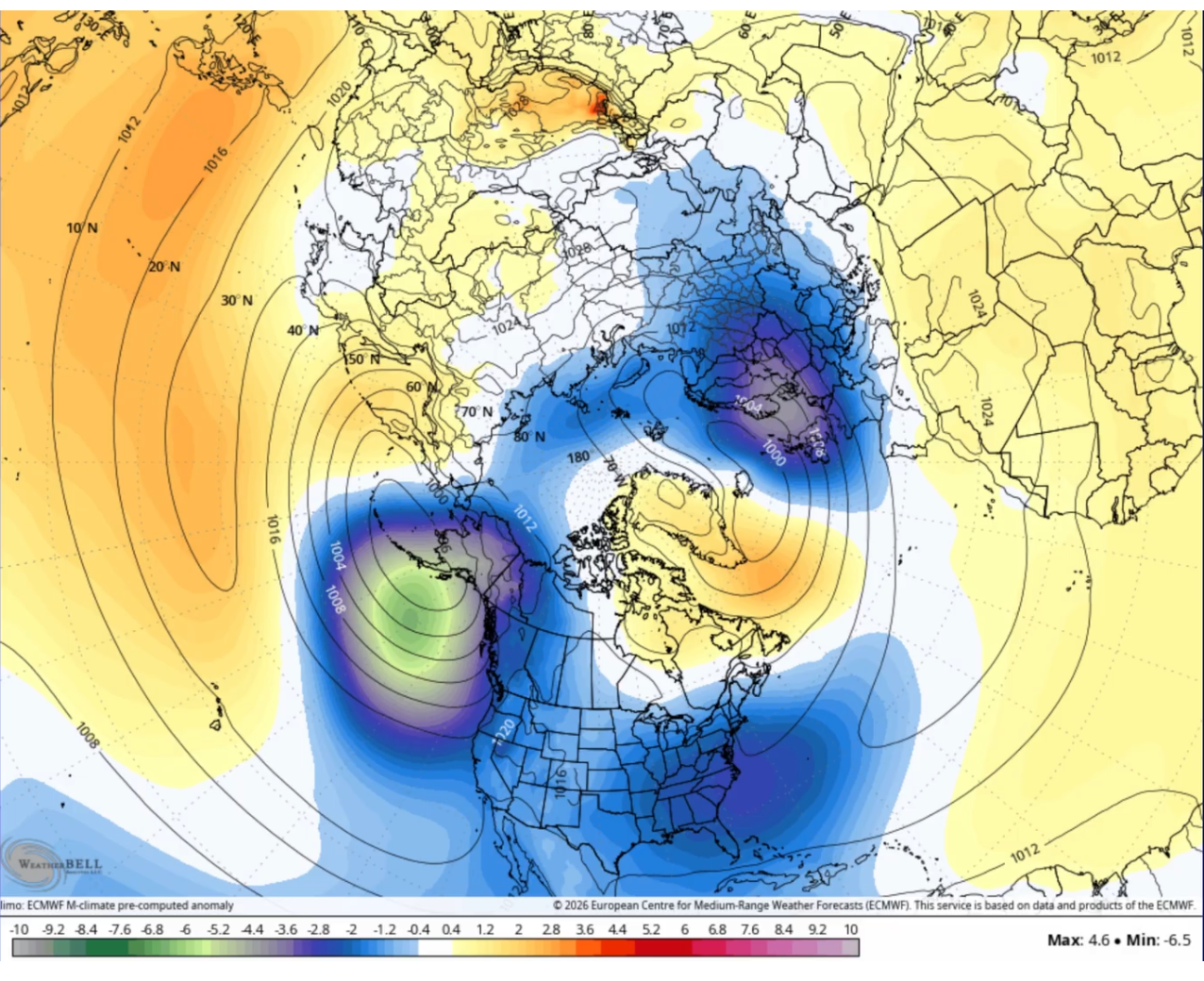
ECMWF shows it is colder than normal and wet in the south. Dec/Jan especially.
-
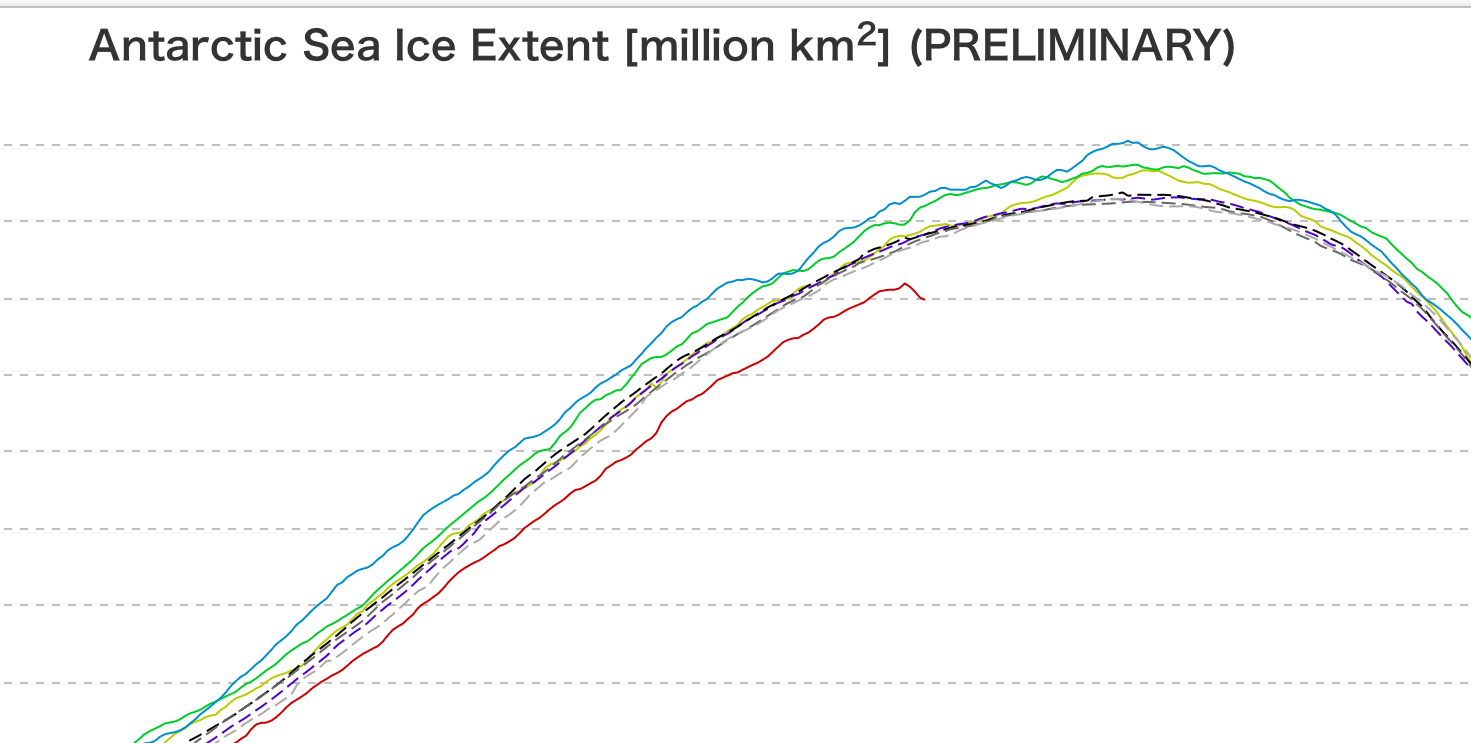
Weirdly just stopped freezing in Antarctica. That red line is 2026
-
Chances are extremely high now that 2026 will be hottest on record. July 2026 Global Temperature Update, Warmest July on Record +1.47°C Temperature Mean July (1880-1920)NASA Current Record (2026) (+1.47C) Second (2024) (+1.44C) Third (2023) (+1.43C) +1.48°C➖ For the Year Hottest year (2024) 1.56c Second hottest year (2025) 1.46c Third hottest year (2023) 1.45c +1.46°C👆 Last 12 Months
-
Antarctica now at 2nd lowest. Massive Ice losses for 3 days straight during refreeze season. Melting season starts around Nov 1st. Ocean are at its hottest ever since record keeping began.
-
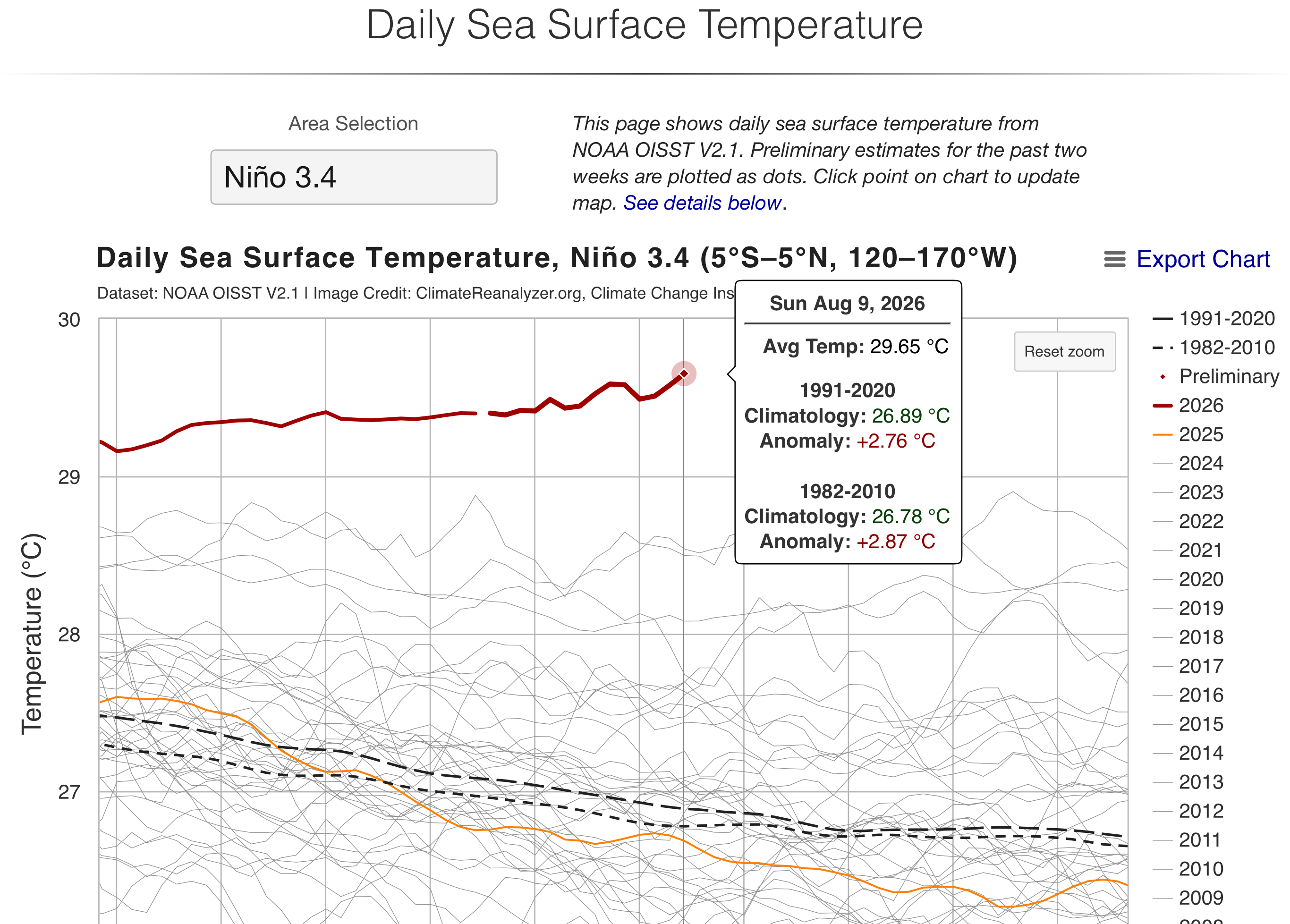
Record breaking El Niño, +2.76C now. we are going to have a really dangerous winter coming up, forecast models are calling a very dangerous winter this year.
-
I was suppose to go to a Ski resort for service work today, had to cancel due to the very bad air quality from the wildfires, there was a Code Orange warning in place.
-
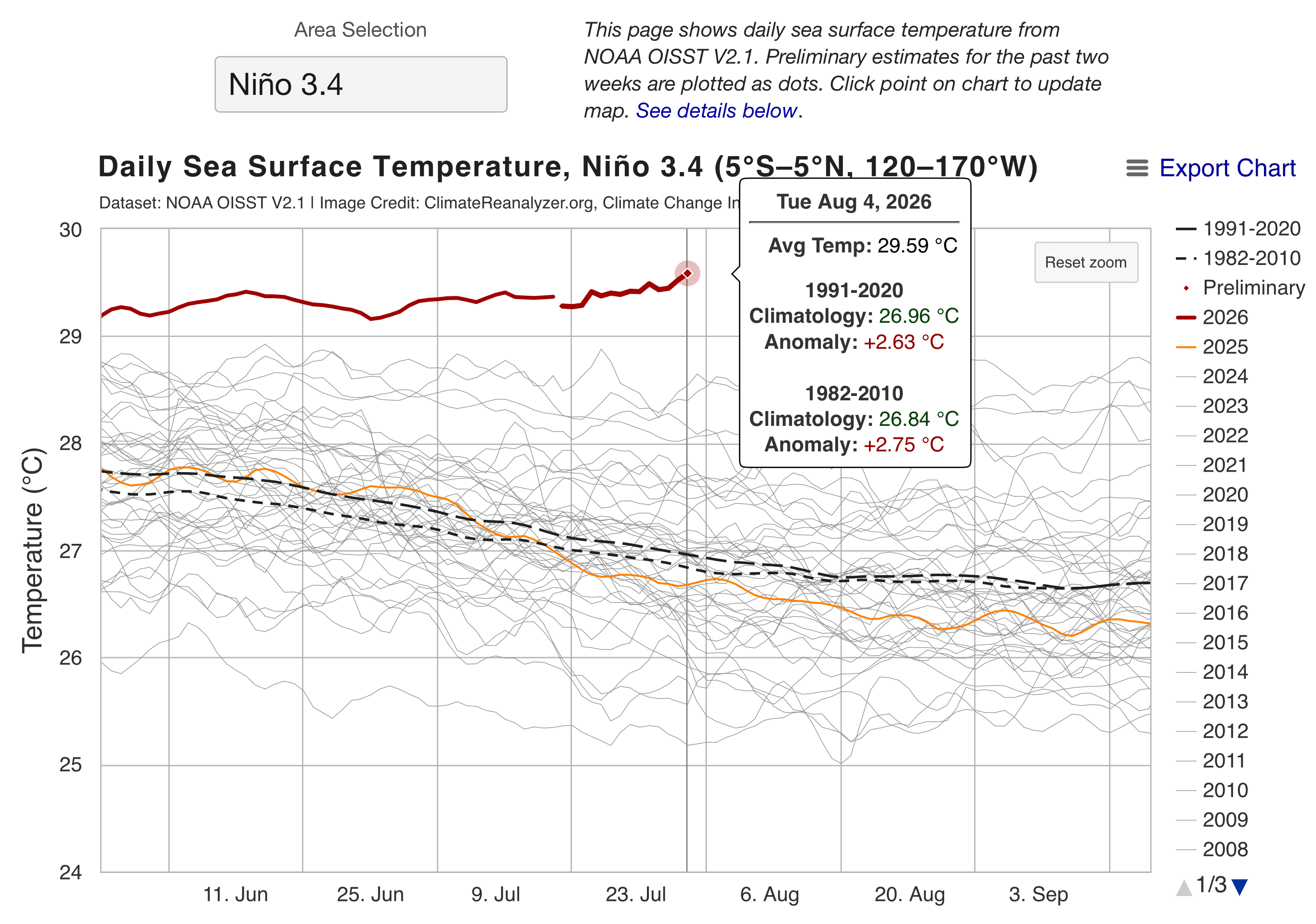
The rapid increase in a single day is crazy, now at +2.63C
-
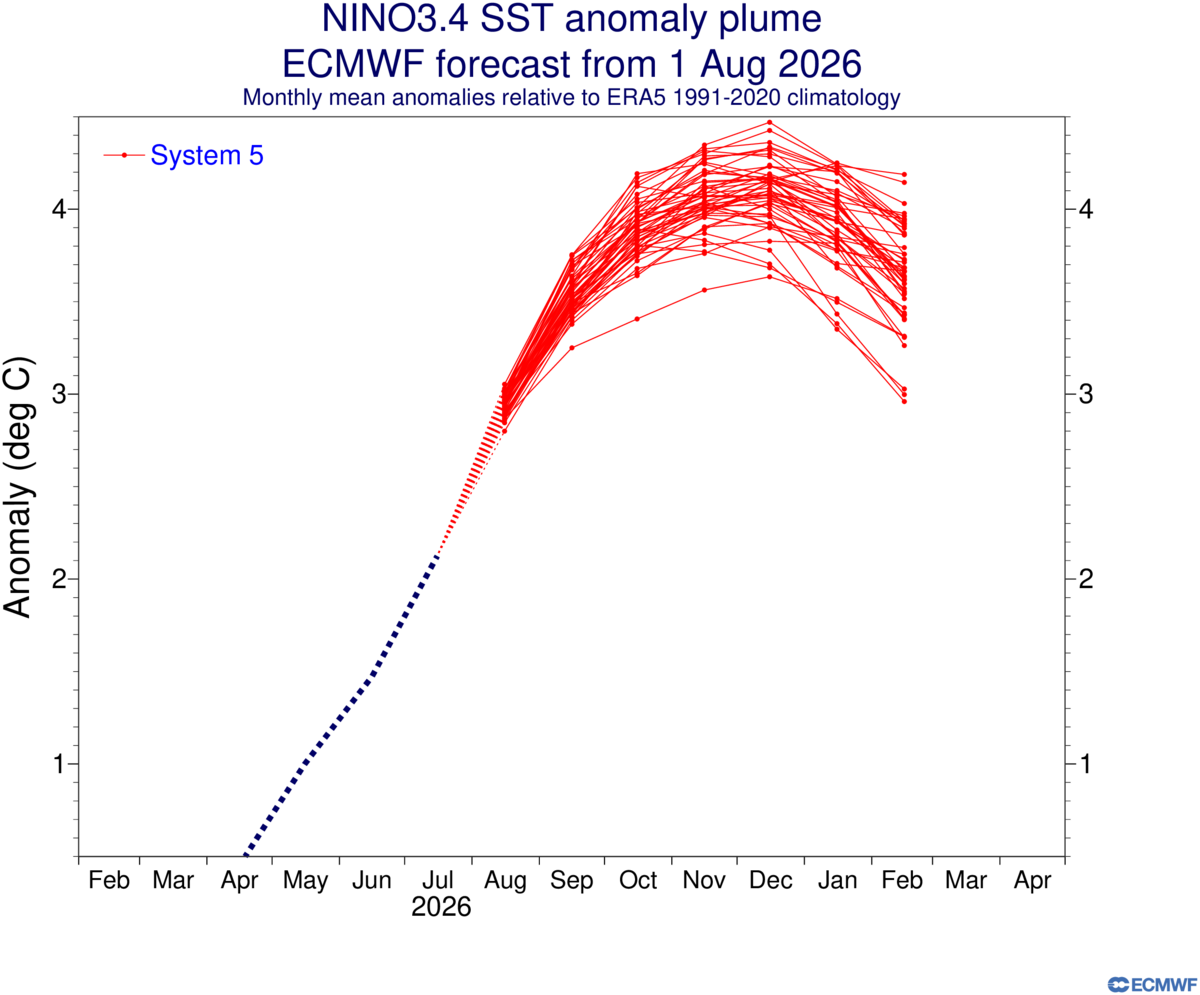
ECMWF just released the latest forecast plumes, it seems to be peaking closer to +4.0C or greater above average temperature, which is higher than July’s forecast. All of the extreme weather that is happening right now is not due to El Niño yet but its about to begin soon.








About JWTalk.net - Jehovah's Witnesses Online Community
Since 2006, JWTalk has proved to be a well-moderated online community for real Jehovah's Witnesses on the web. However, our community is not an official website of Jehovah's Witnesses. It is not endorsed, sponsored, or maintained by any legal entity used by Jehovah's Witnesses. We are a pro-JW community maintained by brothers and sisters around the world. We expect all community members to be active publishers in their congregations, therefore, please do not apply for membership if you are not currently one of Jehovah's Witnesses.