

trottigy
-
Posts
30,611 -
Joined
-
Last visited
-
Days Won
254
trottigy's Achievements






-

US Gas prices - up or down?
trottigy replied to trottigy's topic in Secular News in the Mainstream Media
Hey, it just went down slightly. Here at Costco in the Central Coast of California it's only $6.39. -
Peace and Security, Great Tribulation, Armageddon
trottigy replied to Dhanyel's topic in Secular News in the Mainstream Media
The irony of the very ones cplaining about the weaponizing of the DOJ do the same. ... Clay and iron, eh. Well, we know how all that ends - with a big boulder on both and the growth of the real kingdom government. -
Thank you for your contribution to these works. There are a few others who have done similar. If we start getting posts about the various topics in the book we can pin this like we have the others here
-
US Gas prices - up or down?
trottigy replied to trottigy's topic in Secular News in the Mainstream Media
Yep up. At Costco here premium was $6.459 That's up $.45 in just 2 weeks -
Peace and Security, Great Tribulation, Armageddon
trottigy replied to Dhanyel's topic in Secular News in the Mainstream Media
It looks like the "Do You Remember" came earlier in the mag: https://www.jw.org/finder?srcid=jwlshare&wtlocale=E&prefer=lang&docid=2026687&par=6 -
Republican politics is killing churches
trottigy replied to Barbllm's topic in Secular News in the Mainstream Media
Agreed. All politics other than the Kingdom is going to lead people the wrong direction. It isn't just a right thing or a left thing. Phil 4:8 reminds us where to focus: -
The moderators felt this topic is just best closed. Humans will name what they want and in the New World we can find out what stays and what Jehovah has us rename and when. We know He has named all the stars. I wonder what He has named ours. He likely has planet names too. We all have a lot learn.
- 1 reply
-
- 9
-

-

-
I went into setting, found the app was still there and deleted in settings. That should stomp it out!
-
I tried it and only wanted it on the lock screen. It randomly takes over the other screens. I uninstalled it and it still is there and takes over all the other screens. How do I get rid of it?
-
men with rings
trottigy replied to grain of mustard's topic in General Discussion & Everyday Chit Chat
I've wore one for almost 40 years. -
"Earnestly seeking" ... So, it is a continuous process. The reward isn't to the one who found him (past tense), but to those "seeking" and how? Earnestly. Jesus encouraged us to do that during the sermon on the Mount when he said "keep on then seeking" first the Kingdom. May we never give up seeking and eventually we'll be rewarded.
-
JW Broadcasting - September 2026
trottigy replied to Dhanyel's topic in Encouragement for the Worldwide Brotherhood
https://www.jw.org/en/whats-new/ There it is ... https://www.jw.org/en/library/videos/#en/mediaitems/StudioMonthlyPrograms/pub-jwb-141_1_VIDEO -
US Gas prices - up or down?
trottigy replied to trottigy's topic in Secular News in the Mainstream Media
$5.99 at Costco today and seeing renewed fighting in the strait... It isn't going down soon. I have a funny/ ironic quote for you: https://krmg.com/2026/09/05/trump-keeps-heralding-an-economic-boom-but-even-a-solid-jobs-report-is-causing-problems-for-him/?hl=en-US I couldn't agree more! One year ago diesel was $3.71. Now it is $5.88. That just feels stupid.
-
Peace and Security, Great Tribulation, Armageddon
trottigy replied to Dhanyel's topic in Secular News in the Mainstream Media
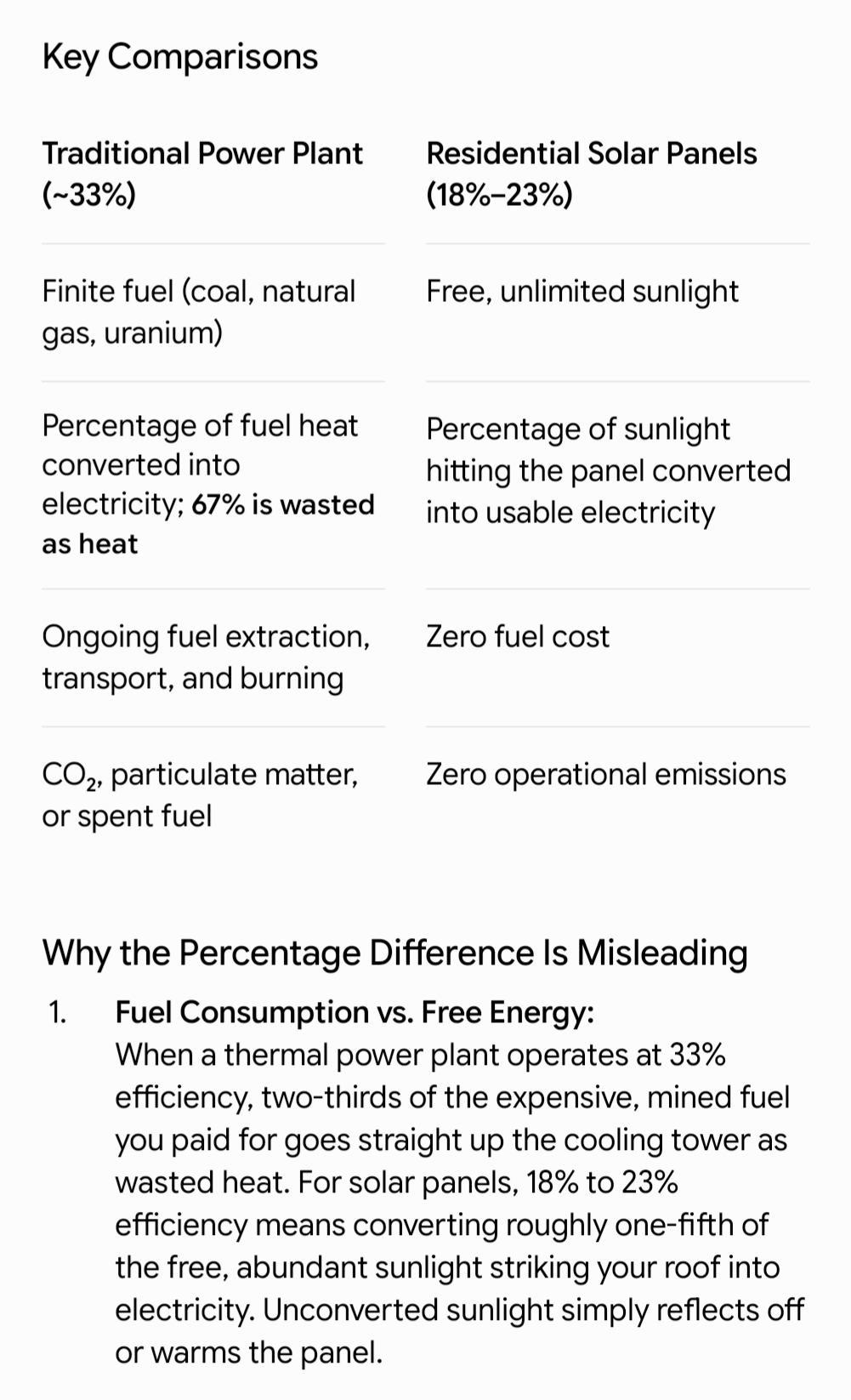
I recognize that AI is impossible to be wrong, but I also have noticed it is how and what questions are asked. https://www.eia.gov/tools/faqs/faq.php?id=107&t=3 From Gemini (much less waste): Sorry. I must have said transmission, but I meant just heat transference/ loss.
-
Peace and Security, Great Tribulation, Armageddon
trottigy replied to Dhanyel's topic in Secular News in the Mainstream Media
Not sure how this became the solar topic, but I am happy for the distraction from the crazy. Did you know, it takes 3 times the power generation at a plant to feed a home than solar right at it. This is because on average of 2/3 of the power going out is lost due to heat transference between the plant and the house. Actually, generating power right at your home is quite the saver - way better than large fields of solar that will also loose 2/3.

















About trottigy

- Birthday 11/01/1967










About JWTalk.net - Jehovah's Witnesses Online Community
Since 2006, JWTalk has proved to be a well-moderated online community for real Jehovah's Witnesses on the web. However, our community is not an official website of Jehovah's Witnesses. It is not endorsed, sponsored, or maintained by any legal entity used by Jehovah's Witnesses. We are a pro-JW community maintained by brothers and sisters around the world. We expect all community members to be active publishers in their congregations, therefore, please do not apply for membership if you are not currently one of Jehovah's Witnesses.